
Our projects
If your biogas digestate is expensive to manage and difficult to dispose of, it can pose a challenge to your operations. Processing the digestate from biogas plants can be a way to address this problem while simultaneously creating a more useful and valuable material.
Our projects
If your biogas digestate is expensive to manage and difficult to dispose of, it can pose a challenge to your operations. Processing the digestate from biogas plants can be a way to address this problem while simultaneously creating a more useful and valuable material.
Our projects
Wrams Gunnarstorp
In Wrams Gunnarstorp, multiple stakeholders have come together to create a circular, climate-smart, and sustainable solution where agriculture, biogas production, and nutrient recycling coexist in symbiosis.
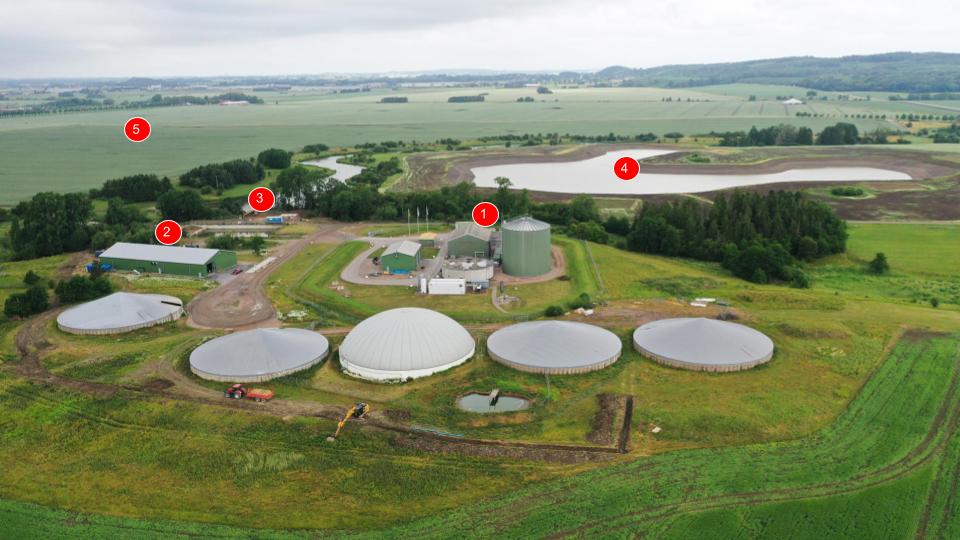
At the biogas facility (1), food waste, manure, and by-products from the food industry are converted into biogas, which can then be used as vehicle fuel or fed directly into the gas grid.
The by-product from biogas is called digestate or biogas slurry, which can be used as-is to fertilize nearby fields. The problem is that it consists of 97% water, making it both expensive and environmentally unfriendly to transport. Additionally, significant amounts of fuel are consumed during the spreading of the digestate on the fields, while the heavy machinery compacts the soil, hindering crop growth in those areas.
Besides these challenges, the nutrient content in digestate is far from ideal. The phosphorus-to-nitrogen ratio is too high. This means that when spreading it, the maximum allowable phosphorus levels are reached before all the nitrogen in the digestate is utilized. As a result, the digestate remains in storage and is spread during less favorable times. A final, significant drawback is the large amounts of nitrogen lost to the air as ammonia emissions during both storage and spreading.
With Ekobalans’ technology (2), we process the digestate by separating it into wet and dry phases while isolating different nutrients to balance them according to local requirements. Here at Wrams Gunnarstorp, we produce a nitrogen-rich nutrient solution that is integrated into a nearby irrigation system, as well as storable, dried, and pelletized circular fertilizer offered on the Swedish fertilizer market.
Instead of purchasing imported and fossil-based chemical fertilizers, we can now utilize the circular nutrient solution from Ekobalans’ facility. With the help of a robotic and climate-friendly irrigation system (4), we can now provide the crops with both water and nutrients by using a dosing pump (5) to inject the right amount of nutrients into the water as it flows from our reservoir to the fields. This precision reduces the risk of over-fertilization while also providing significant savings and promoting soil health.
By focusing on nutrient recycling and circularity, we are building resilience against climate change, political instability, and volatile markets, while fostering long-term soil health.
Our projects
RecoLab
RecoLab is a development facility located adjacent to Öresundsverket, the wastewater treatment plant in Helsingborg. The facility is designed for 2,000 PE (population equivalent).
The facility manages source-separated wastewater from Oceanhamnen, a system also called “Three Pipes Out.” This means that blackwater (toilet water), greywater (kitchen, dish, and laundry water), and food waste are separated into three streams before reaching the wastewater treatment plant. Just as source-separated household waste enables better recycling of materials like paper, metal, and glass, the “Three Pipes Out” system allows for better recycling of vital resources in wastewater and food waste—namely nitrogen, phosphorus, and clean water!
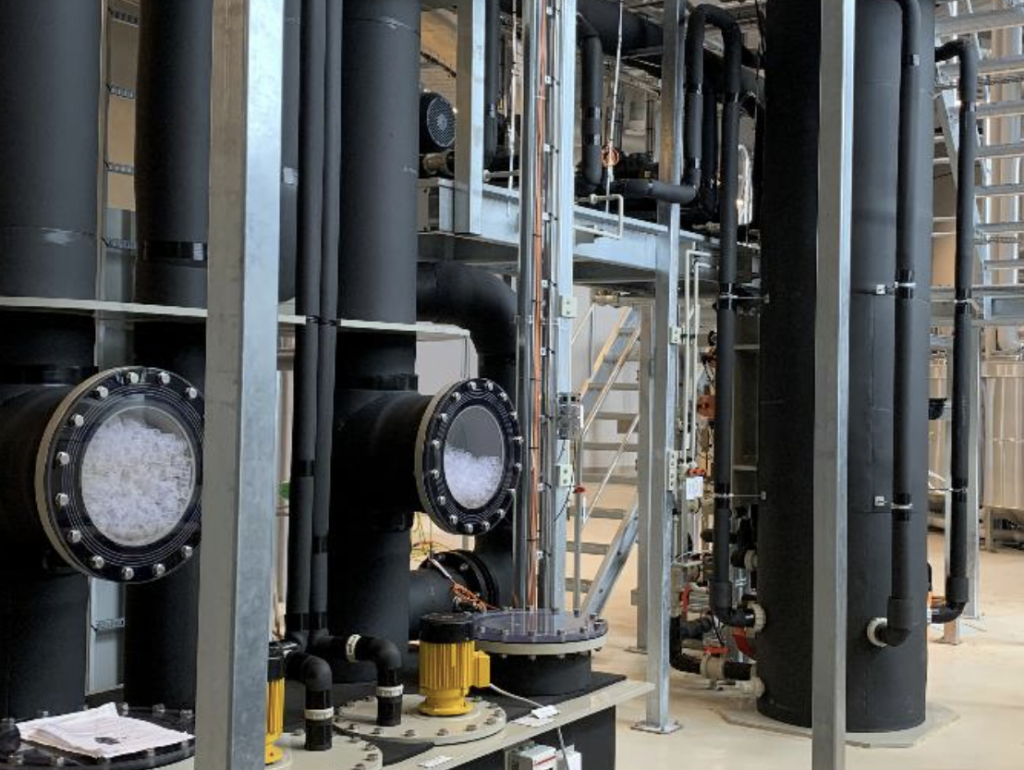
The facility uses Ekobalans technology (eco:P and eco:N) to enable the recovery of important resources such as nitrogen and phosphorus.
Want to know more?
Contact us through phone or E-mail or fill out the form below